
The Hidden Nutrition Behind Anxiety and Depression: What the Gut, Blood Sugar, and Your Nutrients Are Telling You.

A guest post by Dr. Sarah Khan, PhD, MBA, Integrative and Functional Nutritionist
I think of nutrition and therapy as partners, with a powerful synergistic impact on healing! Therapy gives you the tools to understand and reshape your inner world. Nutrition makes sure your brain has the raw materials and the stable internal environment to actually use those tools. This article walks through three of the most overlooked nutritional drivers of anxiety and depression, and what the research actually says about each one.
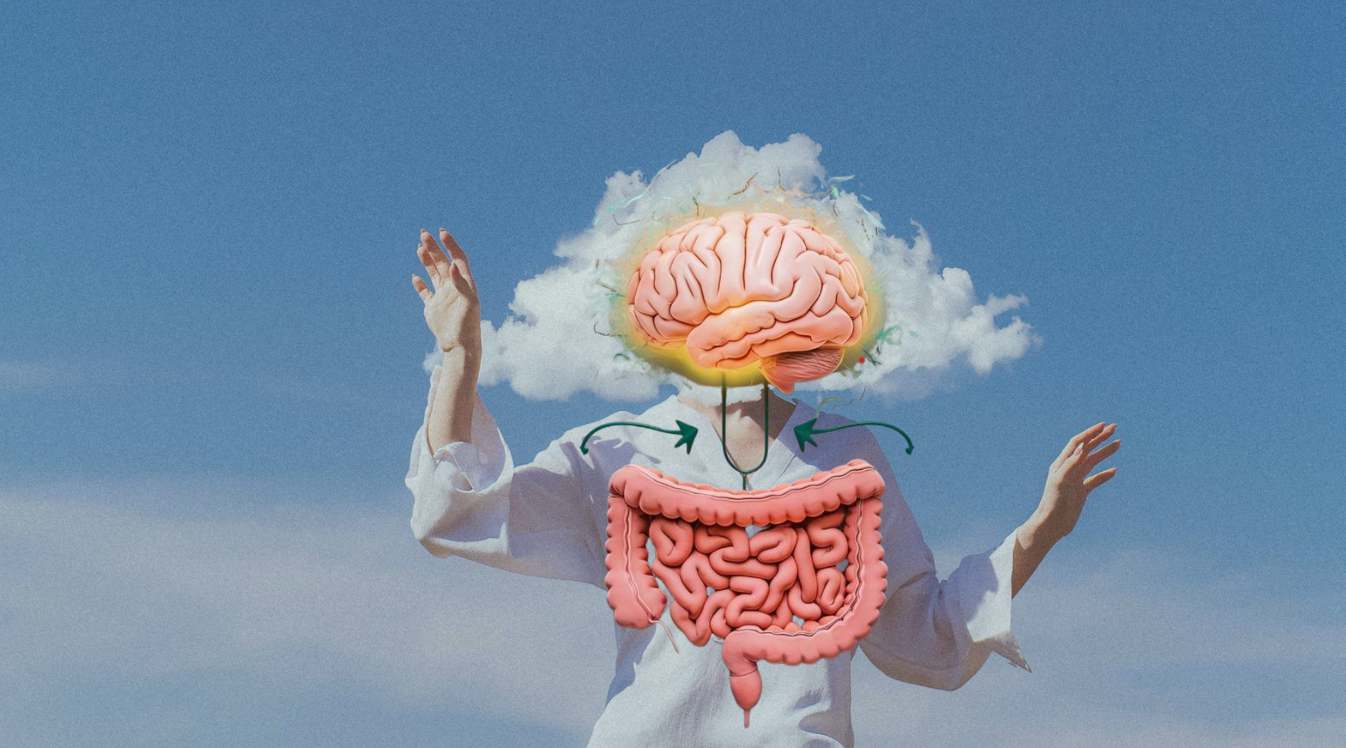
The Gut-Brain Axis: Your "Second Brain" and Your Mood
You have probably felt your gut respond to emotion, the nervous stomach before a hard conversation, the loss of appetite during grief. That is the gut-brain axis at work, and the conversation runs in both directions.
The gut and brain communicate constantly through the nervous, endocrine, and immune systems, with the gut microbiota acting as an active participant in that crosstalk. The enteric nervous system contained in the gut is often referred to as the "second brain," releasing a range of hormones and neurotransmitters, while the brain influences gut function in return, a bidirectional axis.
Here is the part that surprises most people: a large share of your mood chemistry is manufactured in your digestive tract. Approximately 95% of serotonin is produced in the gut, with enterochromaffin cells as its main source of synthesis. Certain beneficial bacteria are directly involved in making calming neurotransmitters, too. Bifidobacterium and Lactobacillus in the gut microbiota can ferment and produce GABA, an inhibitory neurotransmitter that plays a crucial role in emotional regulation.
When the microbial community falls out of balance, mood tends to follow. Dysbiosis, or an imbalance in the gut microbiota, has been linked to anxiety, depression, and other mental health issues. Researchers now treat this connection as one of the most promising frontiers in understanding mood disorders. Emerging evidence from both preclinical models and human clinical investigations has established the microbiota-gut-brain axis as a critical determinant in depression, a bidirectional network influencing mental health through mechanisms previously underrecognized.
What does this mean for you in practice? If you live with digestive symptoms, bloating, irregularity, reflux, or a diagnosed condition like SIBO or IBS, alongside anxiety or low mood, those two things may not be a coincidence. They may be two expressions of the same underlying imbalance. This is exactly the territory I work in with clients, and you can read more about my approach to gut health and the gut-brain connection if it resonates.
The encouraging news is that this is a modifiable system. Dietary components such as probiotics, prebiotics like dietary fiber, short-chain fatty acids, fruits, vegetables, and a range of plant foods may exhibit protective effects against the development of psychological symptoms.
Blood Sugar: The Roller Coaster Your Mood Is Riding
This is one of the most underestimated drivers of anxiety I see, and one of the most fixable.
Every time you eat a meal that spikes your blood sugar quickly, refined carbohydrates, sweetened drinks, a pastry on an empty stomach, your body releases a surge of insulin to bring it back down. Often it overcorrects, and blood sugar drops below baseline. That low, called reactive hypoglycemia, triggers a stress response: your body releases adrenaline and cortisol to pull glucose back up. The physical sensations of that adrenaline surge, racing heart, shakiness, irritability, sudden unease, are almost indistinguishable from a wave of anxiety.
This is not just a theory built on individual sugar crashes. The pattern holds at the population level. High glycemic variability has been linked to a greater risk of both depression and anxiety, irrespective of diabetes status, with findings consistent across multiple measures of glucose variability. In other words, it is not only people with diabetes who are affected. The swings themselves, the highs and lows, are associated with worse mood, even in people whose average glucose looks normal.
There is even early brain-imaging evidence pointing to a mechanism. A study found that acute hyperglycemia may induce depressive symptoms by promoting excessive glutamine activity in the anterior cingulate cortex, a brain region important for emotional processing. And the dietary side of the equation is just as striking. Large population studies of nearly 70,000 women have shown that diets high in added sugars and with a high glycemic impact increase the odds of depression.
For anyone navigating anxiety, this is genuinely good news, because blood sugar is one of the most controllable inputs you have. The strategies are not dramatic: pairing carbohydrates with protein, fiber, and healthy fat to blunt the spike; not skipping meals; front-loading protein earlier in the day; and being mindful of liquid sugar. These small shifts can take the physiological roller coaster out from under your nervous system, so the calm you build in therapy is not constantly undercut by a glucose crash at 4 p.m.
The Nutrient Deficiencies That Masquerade as Mental Illness
Your brain is a manufacturing plant. It builds serotonin, dopamine, GABA, and other mood-regulating chemicals out of raw materials that come from your diet. When a key raw material runs short, production drops, and the result can look and feel exactly like a mood disorder.
A broad body of research connects specific shortfalls to mood symptoms. A narrative review found that deficiencies in B vitamins, vitamin D, magnesium, zinc, selenium, iron, and omega-3 fatty acids are associated with an increased risk of depressive symptoms. A few of these deserve a closer look, because they are common and frequently missed.
B vitamins (B6, B12, folate). These are essential cofactors for building the very neurotransmitters that stabilize mood. When B6, B12, and folate are in short supply, the brain cannot manufacture adequate amounts of serotonin, GABA, and dopamine, the chemicals that help you feel calm, focused, and emotionally stable. B12 deficiency is especially deceptive. It can cause anxiety, depression, brain fog, and panic-like symptoms long before it shows up in routine blood work.
Magnesium. Often called nature's relaxation mineral, magnesium regulates the stress response, and it is notoriously hard to assess with a standard test. Standard blood tests do not accurately reflect the body's magnesium stores, since most magnesium is held in bones and soft tissues rather than circulating in blood, which means someone can be deficient while showing normal blood levels.
Vitamin D. Low vitamin D levels have been consistently linked to increased anxiety, depression, and seasonal mood changes, and deficiency is common in people who live in northern climates or spend significant time indoors.
Iron. This one is frequently mistaken for a panic disorder. When the blood cannot carry adequate oxygen to tissues, the heart works harder, leading to palpitations, shortness of breath, and racing-heart sensations that trigger anxiety responses, a connection that is particularly strong in women.
Omega-3 fatty acids. Of all the nutrients studied for mood, these have some of the most robust support. Omega-3s have the most consistent evidence of any supplement for depression, and a joint taskforce from the World Federation of Societies of Biological Psychiatry and the Canadian Network for Mood and Anxiety Treatments gave them their highest grade of support as an add-on treatment for unipolar depression.
I want to be clear and responsible here: supplements are not a free-for-all, and more is not better. Folate in high doses can mask a B12 deficiency, zinc over long periods can deplete copper, and iron supplements can interfere with thyroid medication, which is why the most useful first step is testing rather than guessing. In my practice, I give clients a specific list of biomarkers to have checked so we are correcting what is actually low, not chasing a generic protocol. This is especially important for anyone with an autoimmune condition like Hashimoto's, where nutrient absorption and thyroid function are deeply intertwined; I write more about that in my work on Hashimoto's and nutrition.
Can Changing How You Eat Actually Change How You Feel?
It is fair to ask whether any of this holds up when put to a real test, not just an association in a survey, but an actual intervention. It does.
The landmark study here is the SMILES trial. It was the first randomized controlled trial to investigate whether dietary changes could improve symptoms of major depressive disorder, and participants who received nutritional support and followed a modified Mediterranean-style diet experienced significantly greater reductions in depression symptoms than those receiving social support alone. The effect was not small. At three months, the trial observed large between-group effect sizes in favour of the dietary intervention group.
That is a profound finding. It means food is not just supportive of mental health in the abstract; for some people, improving diet quality is itself an effective intervention, working alongside the therapeutic and medical care they are already receiving.
The Real Power Is in the Combination
Here is what I have come to believe after years of clinical work: the most durable healing I see does not come from nutrition alone, and it does not come from therapy alone. It comes from the two working together, each one amplifying what the other can do.
There is a reason for this, and it is built right into the gut-brain axis we have been discussing. That axis runs in both directions. Chronic stress and unprocessed emotional pain change the gut, altering the microbiome, increasing intestinal permeability, and ramping up the inflammatory and cortisol responses that feed anxiety and low mood. And the reverse is equally true: an inflamed gut, unstable blood sugar, and depleted nutrient stores keep the nervous system in a state of low-grade alarm that makes emotional regulation harder. When only one side is addressed, the other side keeps pulling the system back toward dysfunction. When both are addressed at once, the whole loop starts moving in the direction of healing instead of against it.
This is exactly why the work that a practice like Our Kind Therapy does is so well matched with functional nutrition. Therapy reaches into the parts of this loop that food cannot touch: the meaning you make of your experiences, the patterns of thought that drive the stress response, the nervous-system regulation that comes from feeling truly heard and supported. Nutrition reaches into the parts that talk therapy cannot reach: the raw materials your brain uses to build calming neurotransmitters, the blood-sugar stability that keeps adrenaline from hijacking your afternoon, the microbial balance that governs so much of your serotonin and GABA. Neither one is the whole answer. Together, they cover the territory.
I see it play out in real life. A client doing deep, courageous work in therapy often finds that work lands differently once the physiological static quiets down, once the 4 p.m. crashes stop, the gut calms, the brain fog lifts. And the calmer, more regulated nervous system that good nutrition supports makes people more available for the vulnerable, demanding work that therapy asks of them. The two are not running on parallel tracks. They are reinforcing each other, and the result is greater than the sum of the parts.
If you are already in therapy and feeling like you are doing the work but still fighting a current you cannot quite name, that current may be physiological, and addressing it could be the missing half of your healing.
How This Fits With the Work You're Already Doing
If you are reading this on Our Kind Therapy's blog, you are likely already invested in your mental health, and that matters enormously. I want to frame nutrition not as one more thing you are failing to do, but as the foundation that makes everything else more effective.
Think of it this way. Therapy helps you rewire patterns, process experience, and build resilience. But if your blood sugar is crashing every afternoon, your gut is inflamed, and your brain is short on the nutrients it needs to make serotonin, you are asking that work to happen on unstable ground. Steady the physiology, and the psychological work has a far better chance to take root.
None of this replaces mental health care. Persistent anxiety and depression deserve real clinical support, and if you are struggling, please keep working with your therapist and physician. What I am offering is a complementary layer: a root-cause look at the body underneath the symptoms, designed to work hand in hand with the care your therapist already provides.
If you are curious whether nutrition might be part of your picture, I created a short Root Cause Quick Scan quiz to help you see which systems, gut, blood sugar, hormones, or immune, might be most worth your attention. And if you would like to talk through your specific situation, you can learn more about working with me here.
Your mind and your body are not two separate projects. They are one system, and when you nourish the whole of it, healing has room to happen.
Dr. Sarah Khan, PhD, MBA is an Integrative and Functional Nutritionist based in New York City, working with clients in person and virtually nationwide. Her practice focuses on gut health,
We're grateful to Dr. Sarah Khan for sharing this with our community. Her work is a natural companion to ours, because the gut-brain axis she describes runs in both directions. Nutrition tends to the raw materials and the internal terrain your brain depends on; the somatic, attachment-based work we do tends to the other side of that same loop. As the nervous system settles, the body follows — cortisol eases, the gut calms, and the physiological static that keeps the mind on alert begins to quiet. Mind and body aren't two separate projects, and we work with the whole of it.
If you are seeking therapy in New York, Our Kind Therapy offers experiential, attachment-based work that supports the mind and body together, including the somatic side of the mind-gut connection Dr. Khan describes here.
→ Explore Full Mental Health & Resilience Specialties
→ Explore All Our Specializations